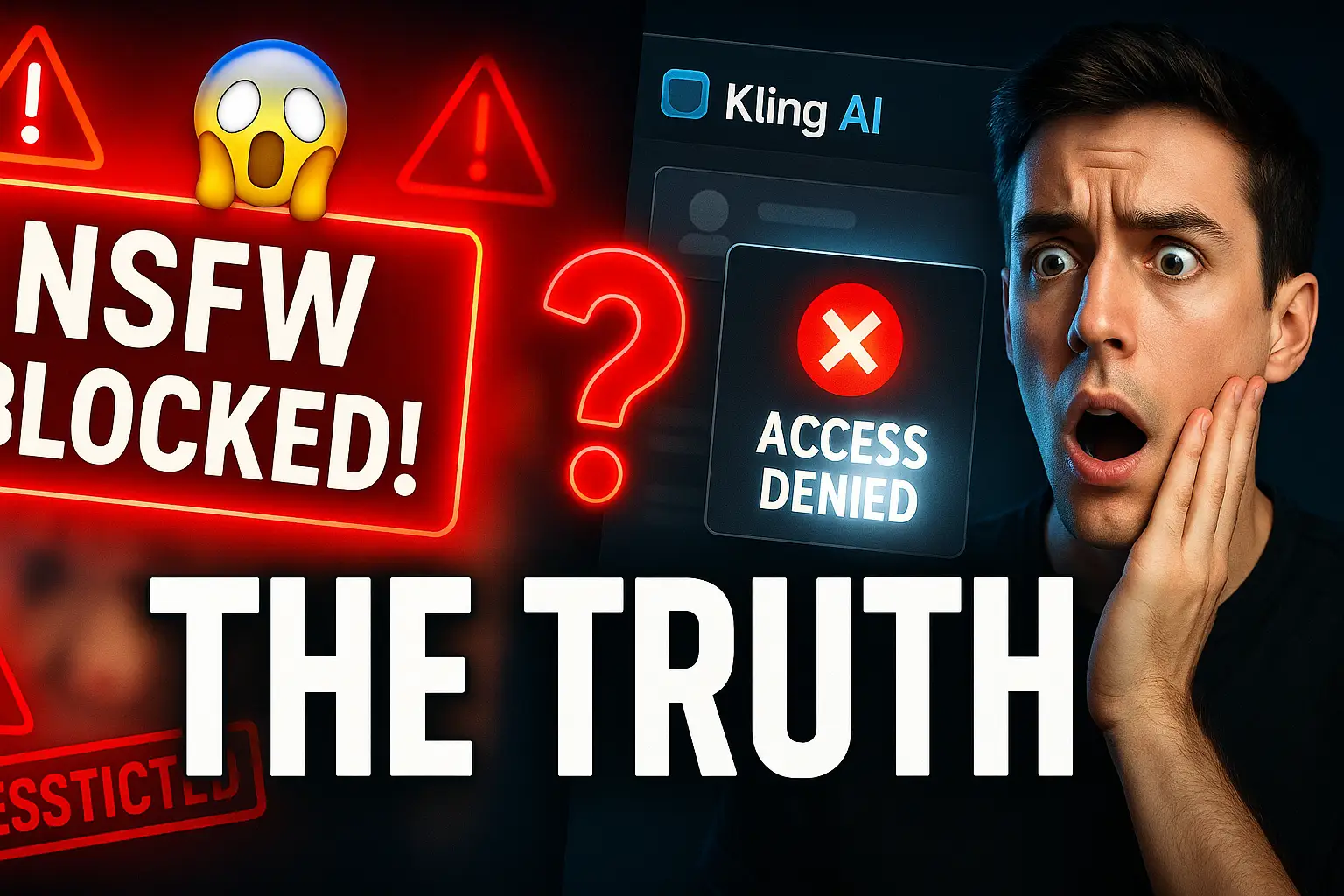
Many users are searching for one clear answer today: does Kling AI allow NSFW or not. The AI world is moving fast, and new tools appear every month with different rules. Some allow full creative freedom, while others use strong filters to keep everything safe. Kling AI is becoming popular because of its smooth, high-quality video and image results, but its content rules confuse many new users.
People want to know what they can create without wasting time on blocked prompts. This is normal because nobody enjoys writing a prompt again and again only to get the same warning. Before using any AI generator, it helps to understand how it treats sensitive content and why certain outputs get restricted.
This blog gives you a clean, real answer based on fresh data and real user experiences. You will learn how Kling AI handles adult content, what triggers filters, what users report, and how its safety system works in practical use.
What NSFW Means in AI Platforms
When people talk about NSFW in AI tools, they usually mean any content that is not safe to show in public places or around others. This includes adult themes, sensitive visuals, or anything that may break safety rules set by modern AI systems. Every platform handles this type of content differently, but most have strong filters to prevent misuse.
AI models understand NSFW by checking patterns, shapes, actions, and even small details inside images or text. They try to stop anything that looks too revealing or suggestive. Sometimes the system becomes strict and even safe content gets flagged. This is why users often feel confused when their normal prompts get blocked without a clear reason.
Kling AI follows similar rules, and understanding what NSFW means in general helps you know what the tool is trying to prevent before you send any prompt. When creators know these boundaries, they get smoother results and fewer errors because they stay within the allowed space.
Common Types of NSFW Content
Most AI tools consider NSFW as anything that shows adult actions, nudity, or very sensitive visuals. This also includes situations that look too suggestive or inappropriate even if they are not fully explicit. AI systems are trained to avoid producing content that can harm users, break rules, or spread unsafe ideas.
Here are the most common types of NSFW content AI platforms usually block:
- Full or partial nudity
- Adult or intimate actions
- Highly revealing poses
- Suggestive body angles
- Sensitive body parts shown directly
- Explicit role-play or adult themes
- Visuals that look unsafe or disturbing
Different platforms may follow different standards, but the core idea stays the same. Anything that looks too revealing, too mature, or too risky gets blocked. Even small details like poses, shadows, or clothing style can trigger the filter when the model thinks something is not safe.
Related Blog: Grok 4 vs ChatGPT 5: My 100-Hour Personal Battle in November 2025 (Full Results Inside)
Why AI Tools Strictly Regulate Adult Material
AI platforms block adult material to keep the space safe for everyone and to follow legal rules. These tools are used by people of all ages, so companies must protect users from harmful or unsafe content. If they allow risky outputs, they can face legal issues, misuse, or public backlash.
Most companies also use preset safety layers to avoid training models on harmful data. These safety systems are built to stop anything that crosses the line, even if the user did not mean to ask for something unsafe. This is why AI tools often take a strict path instead of a flexible one.
Does Kling AI Allow NSFW?
The clear answer is does Kling AI allow NSFW content: no, it does not. The system blocks adult themes, sensitive visuals, and any prompt that looks too revealing. Its filters are strict, and even normal prompts sometimes get flagged when the model detects shapes or details that feel unsafe. Kling AI was designed to follow strong safety rules, so the system acts quickly when anything looks risky.
Users report that the tool blocks many types of content before the image or video even starts generating. The platform focuses on clean, safe results, so its safety layer stays active at all times. Most blocked prompts fall into a few main areas.
Here are the most common prompt types that get stopped instantly:
- Any form of nudity
- Adult or sexual actions
- Sensitive body details
- Suggestive poses or angles
- Explicit role-play or mature themes
Official Statements About Kling AI NSFW Restrictions
Kling AI follows a strict safety system that blocks adult and sensitive content before it can be created. The platform aims to stay safe for all users, so anything that feels too mature or risky is stopped right away. This rule applies to both images and videos, and the system does not allow any type of workaround even if the wording is soft or indirect.
The filters read shapes, poses, colors, and tiny visual hints. If the system predicts that the final result may turn unsafe, it blocks the output immediately. This is why users sometimes get warnings even when their prompts look normal to them.
Here are the common reasons why prompts get rejected:
- Detected body exposure
- Suggestive actions or positions
- Unsafe body details
- High-risk or adult themes
- Model predicting unsafe final output
What “Not Allowed” Really Means for Users
When Kling AI marks something as not allowed, it means the tool will not produce any type of adult or sensitive visual, even if the idea is soft or artistic. Small hints, light wording, or creative styles can still trigger the filter because the system checks deeper patterns, not just text.
This makes the tool very safe but also very strict. Even normal creative prompts may fall inside the blocked zone if they appear close to sensitive content. Knowing these limits helps users avoid repeated prompt failures and stay within what the system accepts.
Here are situations where normal users still get blocked:
- Artistic body references
- Tight or revealing outfits
- Model misreading shadows or shapes
- Filters blocking high-contrast poses
- Soft romantic prompts turning too mature
Kling AI NSFW Policy Explained
Kling AI uses a deep safety system that checks every prompt before it creates any result. The platform tries to stop adult content at the very first stage, so the filter becomes active as soon as the user enters a risky idea. This is why many users see blocked messages even when their prompt looks simply. The system looks for shapes, patterns, or clues that can turn the final output into sensitive content.
This safety layer works for both images and videos, and it stays running all the time. The model reads visual hints, text meaning, and even the style you are trying to use. If the system finds anything risky, it stops the prompt. This is why the term kling ai nsfw appears so often in user discussions, because many people want to understand why normal prompts fail.
How Kling AI Detects and Blocks Adult Content
Kling AI uses pattern recognition to catch unsafe visuals before they appear. The system studies outlines, body positions, shadows, colors, and the mood of the prompt. Even a soft hint can trigger the block because the model tries to stay extra careful. This heavy checking prevents unsafe results but also makes the tool sensitive.
Here are the main triggers the model reacts to:
- Revealing body outlines
- Adult movements or implied actions
- Body parts flagged as unsafe
- Shadows or shapes that look suggestive
- Text hints that lead to mature themes
The system does not depend on text only. It predicts what the final image or video may look like and blocks it early. This makes the tool safe but strict.
Editor’s Recommendation: Is FlixHQ Safe in 2025? Risks, Review & Best Alternatives
Safety Filters and Moderation Systems
Kling AI uses layered safety filters that check text meaning and visual outcomes at the same time. If one layer catches a risky pattern, the whole generation stops. This setup helps protect the tool from misuse and keeps the platform clean for all kinds of users. It also aligns with rules made by global AI companies that do not allow adult material.
These safety filters work in three simple steps.
They check:
- The written prompt
- The predicted visual shapes
- The final output path before creation
If anything looks unsafe at any stage, the result is blocked instantly.
What Kling AI Blocks vs What It Allows
Kling AI follows a very strict line when it comes to sensitive content. The system blocks adult actions, unsafe visuals, and anything that looks too revealing even before the final image appears. Because the filters run at every stage, many prompts fail early, and users often wonder why even normal ideas get stopped. This happens because the tool predicts the final output and reacts quickly when it sees anything risky.
Even though Kling AI allows creative freedom in safe areas, there are limits that users must understand. Knowing what the tool blocks and what it sometimes accepts helps you avoid wasted attempts. It also helps you write prompts that stay inside the safe zone without triggering any warning messages or errors.
List of Fully Blocked NSFW Prompts
These types of prompts almost always fail because the system marks them as unsafe:
- Any form of nudity
- Adult or intimate actions
- Exposed or sensitive body parts
- Suggestive or mature poses
- Explicit role-play or adult themes
- Sexual positions or implied actions
- Prompts that lead to adult scenes
Content That Might Pass but Isn’t Guaranteed
Some ideas look safe to users but still fail because the system predicts a risky output:
- Tight or revealing outfits
- Close-up body angles
- Artistic figure drawings
- Dark shadows that look like unsafe shapes
- High-contrast lighting on body areas
- Soft romantic scenes that feel too expressive
Borderline Cases Reported by Users
Many users share examples where normal prompts got blocked, and the model misunderstood simple ideas:
- Characters wearing fitted clothing
- Dance poses that look too close
- Fitness scenes with strong body outlines
- Fashion shots with bold body shapes
- Silhouette scenes that appear mature
- Scenes where the model misreads the mood
These cases show how careful and strict the safety layer is.
Why Kling AI Doesn’t Support NSFW Content
Kling AI does not support adult material because the platform wants to stay safe for all users. Many people from different age groups use AI tools, so the company must follow rules that protect everyone. If a platform allows adult scenes, it can face legal trouble, misuse, and safety risks. This is why the system blocks anything that even looks close to unsafe content.
Another reason is training data. AI models work best when they learn from clean and safe information. If the data is mixed with adult or harmful visuals, the model becomes risky. It may create outputs that break laws or harm people. To avoid this, companies keep their models trained on safe data only. This helps the tool stay stable, trusted, and ready for everyone.
Real User Experiences and Common Issues
Many users share the same problem when they try Kling AI for the first time. They enter a simple prompt, press generate, and the tool blocks it before anything appears. This feels confusing because the prompt looks safe, but the system sees something risky in the pattern. Kling AI checks shapes, poses, outlines, and even lighting. If it predicts that the final image may turn unsafe, it stops everything right away.
These strict checks create a mixed experience. Some users appreciate the safety, while others feel the tool becomes too sensitive. Many people expect smooth, creative results, but instead they find warnings or blocked messages. Understanding these issues helps new users avoid the same frustration and gives them a clear idea of how the filters react.
Frequent “NSFW Detected” Errors
Users often see the same warnings again and again. Even when they try something simple, the system still blocks it. Here are common situations that trigger the “NSFW detected” error:
- Outlines that look close to body exposure
- Clothing that appears too tight or shaped
- Poses that resemble adult movements
- Dark lighting that creates unsafe silhouettes
- Scenes with characters standing too close
- Keywords that hint at romance or physical closeness
The model reads these hints very carefully and reacts fast.
Examples of Blocked Prompts
People report many different cases where their safe prompts still get blocked. Some of these examples show how strict the model can be:
- Fitness poses with strong body angles
- Dance moves that look expressive
- Artistic figure drawing attempts
- Fashion shots with bold outlines
- Silhouette photography scenes
- Close-up character portraits
These prompts look normal to humans, but the AI predicts a risky output.
Recent Kling AI Updates Making Filters Stricter
Users say that newer updates made the filters even stronger. Prompts that worked in older versions now get rejected. This shows that the company wants to keep the platform safe and reduce any chance of unsafe content being created.
These update changes affect users in many ways:
- Stricter body-shape detection
- Faster blocking based on predicted visuals
- More sensitive keyword checking
- Stronger outline and shadow analysis
- Better detection of suggestive poses
- Higher accuracy in catching unsafe content
These updates keep the tool safe but also harder to use for borderline creative ideas.
Final Verdict on Kling AI and NSFW Content
Kling AI is a powerful tool for clean and safe creations, but it does not support any kind of adult or sensitive content. The system checks every prompt very closely and blocks anything that looks risky, even if the user believes the idea is safe. These strict rules help protect users of all ages, though they also limit what creators can make. Because of this, many people want a clear answer about its content limits before choosing it for their projects.
If your work needs more creative freedom, Kling AI may not fit your needs. Its filters often act early and may even stop normal prompts when the model predicts an unsafe result. Many creators use other platforms when they need open content and return to Kling AI when they want clean, sharp, and safe outputs. Understanding these limits makes your workflow easier and helps you pick the right AI tool without confusion.
FAQs About Kling AI NSFW Rules
Does Kling AI allow NSFW content?
No. Kling AI blocks all adult and sensitive content at the prompt level.
Why does Kling AI reject normal prompts?
The system predicts unsafe shapes or patterns and blocks the prompt before generation.
Can Kling AI create artistic nudity?
No. Even artistic nudity is filtered and stopped by the safety system.
Is there any way to bypass the NSFW filters in Kling AI?
No. The filters are strict and block risky outputs automatically.
Does Kling AI work better for safe content?
Yes. It performs best when the prompt stays fully clean, simple, and safe.