How long is a football game? This question comes up a lot in the United States, especially for people watching American football for the first time. On paper, the game looks short, but once you sit down to watch it, the experience feels much longer. That difference often leaves viewers confused.
A football game officially lasts 60 minutes, but in real time, most games take close to three hours to finish. Halftime, team timeouts, television breaks, penalties, and replay reviews all slow the clock and stretch the total length.
This guide focuses on what really matters to viewers. You will learn how long football games last at different levels and why some games run longer than expected. Everything is explained in simple terms so you know exactly what to expect before watching a full game.
How Football Game Timing Works
To understand why football games last so long, it helps to know how the game clock actually works. In American football, the clock does not run all the time. It starts and stops many times during a game, which adds extra minutes.
The game is divided into four quarters, and each quarter is fifteen minutes long. This means the total playing time is sixty minutes. However, the clock stops when passes are incomplete, players step out of bounds, penalties are called, or a team scores. These stops may seem short, but they add up quickly.
There is also a long break in the middle of the game. Halftime gives players time to rest and adjust, but it also pauses the action for viewers. When this break is combined with timeouts and official reviews, the flow of the game slows even more.
Because of these rules, football feels very different from sports where the clock keeps running. The stop and start nature of the game is the main reason real time viewing lasts much longer than the game clock suggests.
Game clock and quarter structure
To understand why football games last longer than expected, it helps to look at how the game clock works. American football is played in four quarters, and each quarter is fifteen minutes long. This makes the official playing time sixty minutes, but that number only reflects time when the clock is running.
The clock stops often during normal play. Incomplete passes, players stepping out of bounds, penalties, and scoring plays all pause the clock. These short breaks happen many times, and together they add a lot of extra minutes to the game.
Halftime and built-in breaks
After the second quarter, the game stops for halftime. This break gives players time to rest and coaches time to adjust their plans. For viewers, halftime adds a noticeable pause to the game, especially during televised matchups.
In addition to halftime, each team is allowed multiple timeouts. Officials may also stop the game for reviews or injury checks. All of these built-in breaks slow the pace and extend the total real time length.
Because of this stop and start structure, football feels very different from sports with a continuous clock. The rules around timing are the main reason a one hour game on paper turns into a much longer viewing experience.
NFL Football Game Length Explained
For most people in the United States, football usually means the NFL. An NFL game may look short on the schedule, but the real viewing time is much longer. From kickoff to the final whistle, most games stretch well beyond the game clock.
On average, an NFL football game lasts about three hours in real time. Some games finish slightly earlier, while others can go longer depending on how the game unfolds. Close scores, penalties, and reviews often add extra minutes.
Several built in elements slow the pace of NFL games:
- Frequent television commercial breaks during stoppages
- Team timeouts used for strategy and rest
- Clock stoppages after incomplete passes and plays out of bounds
- Instant replay reviews for scoring and close calls
- Longer halftime shows during nationally televised games
Because the NFL is closely tied to television broadcasts, the game flow is designed around scheduled breaks. This makes NFL games longer than many other sports, even though the official playing time stays the same.
For viewers, this means planning ahead. Watching a full NFL game is a time commitment, especially during prime-time matchups.
College Football Game Duration
College football games often last longer than professional games, even though the official playing time remains the same. Like the NFL, college football is played in four quarters of fifteen minutes each. The difference comes from how often the game clock stops.
Several factors push college games past the three hour mark:
- The clock stops more frequently to move the chains
- Replay reviews are used more often and take longer
- Teams use more timeouts for strategy
- National television coverage adds extra breaks
- Close games increase stoppages late in each half
Because of these pauses, the flow of college football feels slower. Each stop may seem small, but together they add a large amount of extra time.
In real conditions, many college football games last well over three hours. High profile matchups, rivalry games, and contests that go into overtime can approach four hours from start to finish.
High School Football Game Length
High school football games are usually shorter than college and professional games. The rules are designed to keep the game moving and reduce long stoppages. Because of this, the total viewing time is easier to manage for students, parents, and local fans.
Most high school football games are played in four quarters, but each quarter is shorter than at higher levels. The clock also runs more often, and there are fewer television related breaks to slow things down.
Several reasons explain why high school games finish faster:
- Shorter quarter length compared to college and NFL games
- Fewer timeouts allowed for each team
- Limited use of instant replay or official reviews
- No long television commercial breaks
- Faster game flow with simpler rules
In real time, many high school football games finish in about two to two and a half hours. This makes them easier to attend in person and more predictable for families planning their time.
Actual Play Time vs Time Spent Watching
Many people are surprised to learn that only a small portion of a football game is spent on live action. The rest of the time goes into pauses, breaks, and resets that slow the pace. This difference is one of the main reasons football games feel long.
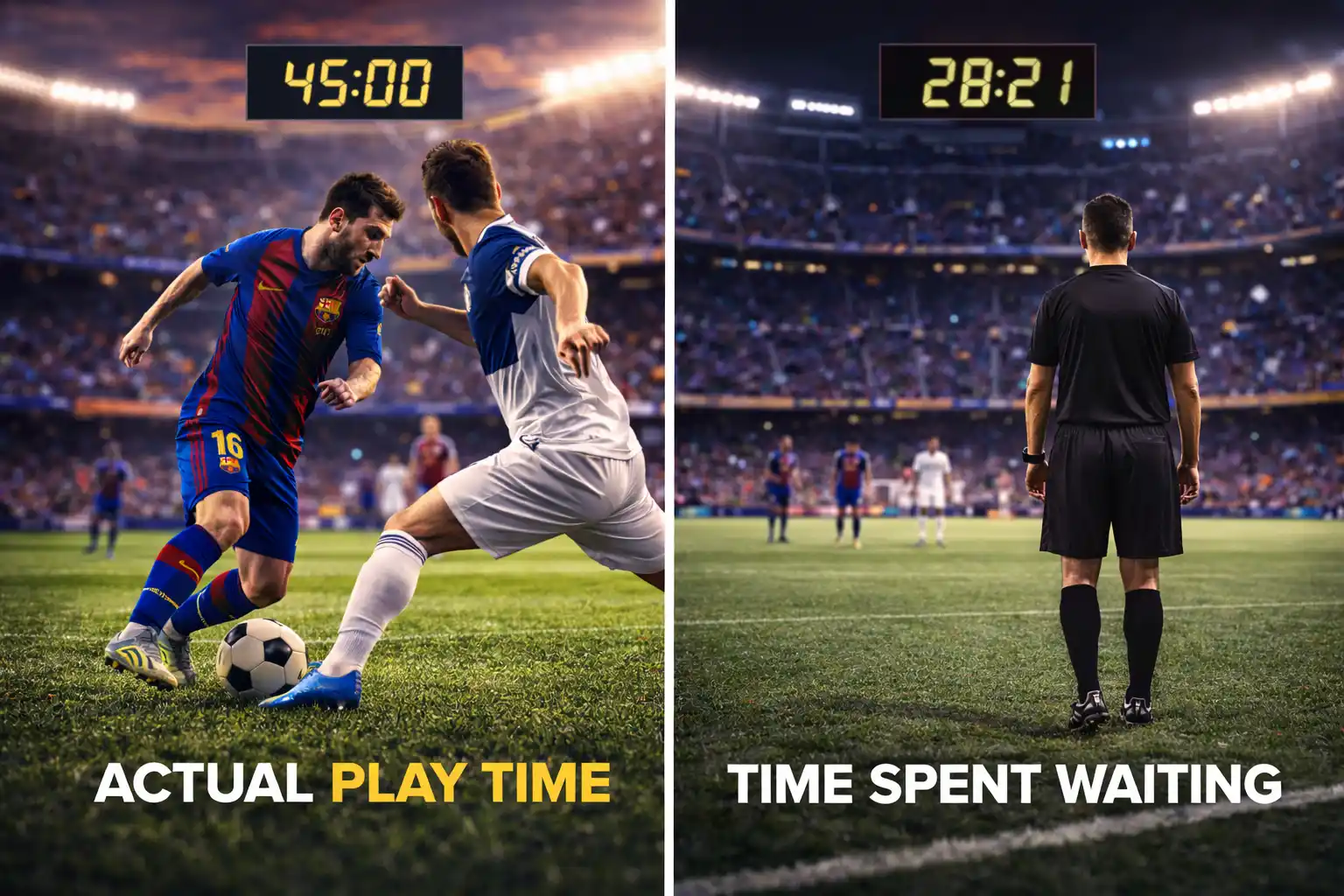
How much of the game is real action
Out of a sixty minute game clock, the ball is actually in play for a much shorter time. Most of the viewing experience involves waiting between snaps, plays, and stoppages.
Here is where time usually goes during a football game:
- Players lining up before each play
- Clock stoppages after incomplete passes
- Breaks after scoring plays
- Team huddles and substitutions
- Official reviews and measurements
Because of this stop and start rhythm, fans spend more time watching setup than action. This is normal in American football and part of how the sport is structured.
Even though the action time is limited, the pauses allow strategy, analysis, and recovery. For many fans, this is what makes football unique compared to fast paced sports with a running clock.
Why Football Games Often Feel Long
Football games feel long because the action is spread out over many pauses. Even when the score is exciting, frequent stops break the rhythm and stretch the total viewing time. This makes the game feel slower than the clock suggests.
Most of the extra time comes from planned and unplanned breaks during play:
- Television commercial breaks during stoppages
- Team timeouts that slow the pace
- Penalties that stop play and reset the clock
- Injury pauses that delay the next snap
- Official reviews for close or scoring plays
- Clock management late in close games
Because these pauses happen again and again, the game feels longer, especially during close matchups. This stop and start flow is a normal part of how football is played and watched.
Football Game Length Comparison
Football games follow the same basic structure at every level, but the real time length changes. The difference comes from clock rules, stoppages, and media coverage. A clear comparison makes it easier to understand what to expect.
| Level of Football | Official Game Time | Average Real Time |
| NFL | 60 minutes | 3 to 3.5 hours |
| College Football | 60 minutes | 3.5 to 4 hours |
| High School Football | 48 minutes | 2 to 2.5 hours |
As the level increases, the number of stoppages and breaks also increases. This is why professional and college games take much longer to finish than high school games.
Overtime and Its Impact on Total Time
Overtime adds extra minutes to a football game and can extend the viewing time more than expected. While not every game goes into overtime, close matchups often do.
During overtime, teams run additional plays and use more timeouts. Clock stoppages and official reviews also continue, which increases the real time length. As a result, games with overtime usually finish later than scheduled.
Final Takeaway
A football game may look short on the clock, but the real time experience is much longer. The official playing time stays the same, yet breaks, stoppages, and rules stretch the game over several hours. Knowing this helps set the right expectations before watching.
The game level also matters. Professional and college games usually take the longest, while high school games finish much sooner. Overtime, close scores, and television coverage can push the total time even further.
If you plan ahead and understand how football timing works, the experience feels less confusing and more enjoyable. Once you know what to expect, watching a full game becomes easier and more satisfying.
Common Questions Fans Ask
How long is an NFL game in real time?
An NFL game usually lasts about three hours in real time. This includes halftime, timeouts, commercials, and clock stoppages during play.
Are football games 2 hours?
Most football games are longer than two hours. While the game clock shows 60 minutes, the real time experience is usually closer to three hours.
How long is 2 quarters in football?
Two quarters equal 30 minutes of game clock time. In real time, watching two quarters can take much longer because the clock stops often.
Why does an NFL game take 3 hours?
NFL games take about three hours because of frequent breaks. Timeouts, penalties, replay reviews, and television commercials all slow the game.
How long does halftime last in football?
Halftime usually lasts about 12 to 15 minutes. During televised games, it can feel longer because of extended coverage and breaks.